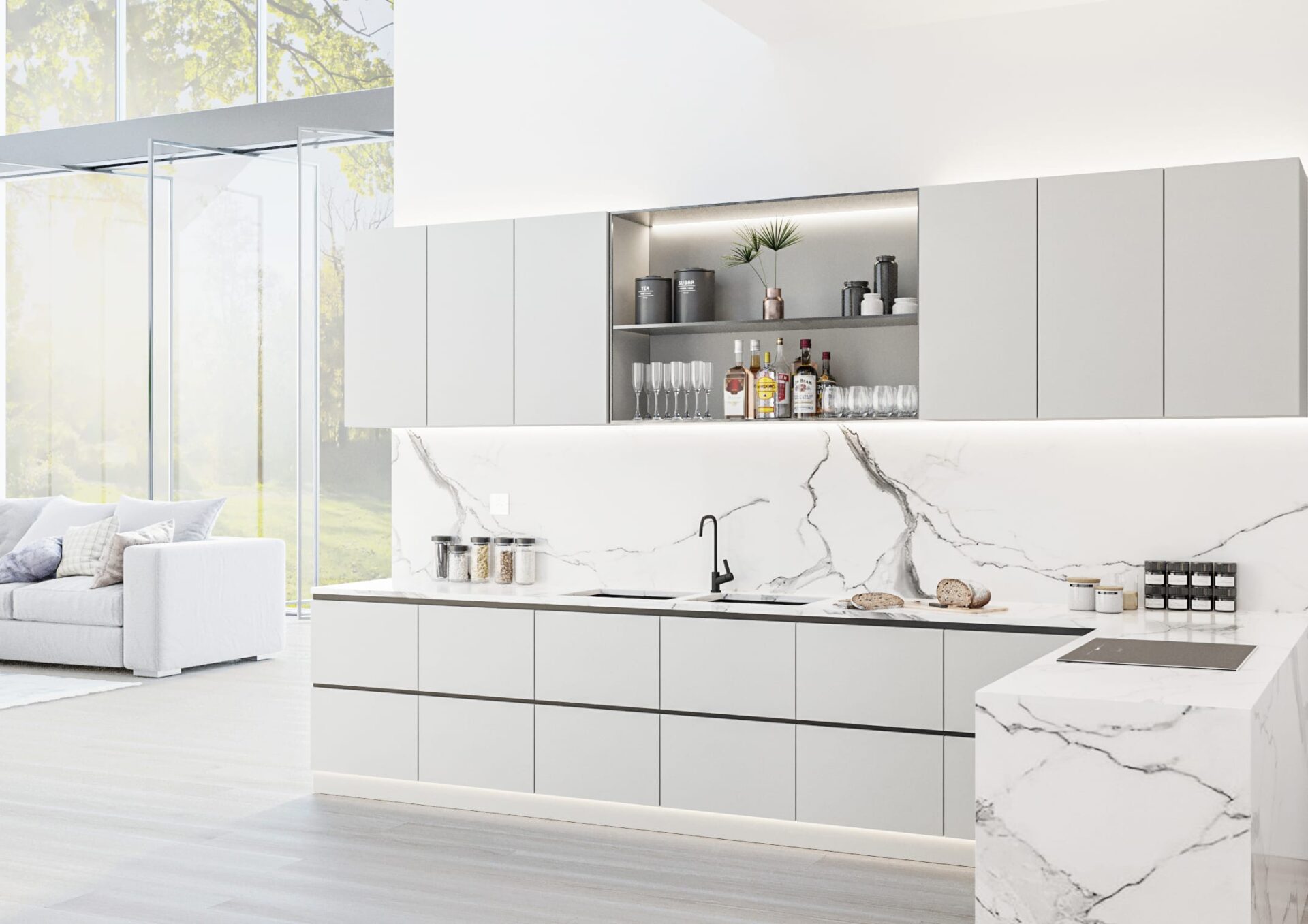


When it comes to designing and producing bespoke kitchens, there are several ways to make the process more eco-friendly. By choosing sustainable materials, reducing waste, and implementing energy-efficient practices, we are able offer our customers beautiful and functional kitchens that have a minimal impact on the environment.
Kesseler Kitchens
Kesseler, our kitchen manufacturing partner, are committed to minimising their environmental footprint wherever they can and this is one of the reasons why we chose to partner with them at Saute & Soak. We are not only proud that the kitchens are hand-made on home turf, but also that the manufacturing processes have sustainability at it’s core. Now it would be easy to bamboozle you with a long list of facts and figures here, but let’s keep this simple and outline exactly what that means…
Energy Efficient
The Kesseler factory in Nottinghamshire where your kitchen is built, has a fantastic process where all excess packaging and wood off-cuts from the kitchen production process are run through a wood chipper and then channeled into a furnace, which then heats the factory and offices. So there is very little reliance on gas or electric heating systems.
Sustainable Materials
As a natural resource and renewable material, wood is fundamentally sustainable. The wood that Kesseler use for our sustainable kitchen cabinetry comes only from certified forests around Europe, with a supply chain that is overseen by the Forest Stewardship Council and the Programme for the Endorsement of Forest Certification Schemes (PEFC). Suppliers are increasingly procuring wood through their own wood-buying and forestry companies allowing them to trace the origins of the wood all the way back to the standing tree.
Reduction in Diesel Emissions
Timber production takes place at a number of European saw mills with the timber being transferred to nearby production plants. The saw mills have a direct link with the national railway network, which allows for more environmentally responsible transportation and prevents over 5,500 diesel-emitting lorry journeys every year.
Recycled Materials
Up to 40% of the wood used in chipboards is recycled material, using waste wood from furniture, pallets and wooden packaging materials. Our wood supplier run their own recycling enterprises in the UK under the name Timberpak, where recycled wood is processed and used for chipboard production.
Reduced CO2
Kesseler reduce C02 in two ways – by using a board supplier that has it’s own biomass power plants (including one in the UK), and by using Melamine-Faced Chipboard which absorbs more CO2 during its growth than is emitted during the transport and production processes. In addition, it consists of 85% renewable resources (wood & paper) and just 15% fossil fuels (glue, wax and resin).
I’ll drink to that
Here at Saute and Soak HQ we have also been improving. The showroom and workshops are now EPC A rated, reducing our carbon footprint too. We’ve invested in many areas including solar panels and are now nearly self sufficient with minimal electrical requirement and no use of gas or oil. So if you fancy popping over for a coffee, which is ethically sourced, you can rest assured you’re helping the world be a better, more sustainable place while you are at it.
Want to pop in and see us, but struggling for time?
Don’t worry if your busy right now, just fill out the short enquiry form below and we’ll give you a tinkle back to discuss any informaiton you require to get your dream kitchen started. We could even arrange a zoom call, if you prefer…
If you just can’t wait and want to speak to one of team right now, just pick up the phone and we’ll be all ears 01909 261 061